

If you’ve ever stood in a minimalist room—think clean lines, neutral tones, not a single knickknack out of place—and felt like something’s missing? That “something” is almost always texture. Sure, minimalist design is about function and calm, but it’s easy to fall into the trap of making it feel like a sterile hotel lobby instead of a warm, intentional space. Here’s the trick, though: you don’t need to clutter the room to add depth. All you need is one statement piece, and in my years as a velvet curtain supplier, I’ve found that a well-chosen pair of classic velvet curtains is exactly that piece.
Wait, I know what you’re thinking. Velvet and minimalist? That sounds like a match made in a 90s living room gone wrong, right? But hear me out. It’s all about balance. Minimalism is about curation, not restriction, and velvet’s lush, dimensional texture brings a soft, luxurious contrast to the hard, smooth surfaces most minimalist spaces rely on—think concrete floors, matte white walls, or low-slung leather sofas. It doesn’t overpower; it elevates, if you style it right.
First things first: pick the right color. Minimalist rooms live in a neutral palette—beiges, grays, off-whites, soft charcoals. Your velvet curtains shouldn’t clash with that. Instead, they should complement, and even warm up, those neutrals. Let’s break this down. If your walls are stark white, a classic velvet curtain in a muted taupe or dusty blue will add depth without screaming for attention. Too bright, and you’ll throw the whole minimalist vibe off. If you’ve got warm wood tones in your furniture or floors, a deep forest green or burnt sienna velvet will tie the space together without being over the top. Avoid bold, high-saturation colors—save those for a throw pillow or a piece of art, not your curtains. And if you’re really playing it safe? A soft gray or cream? Wait, no—skip cream. It can look too washed out in a minimalist room. Go for a warm white or a medium gray that has a subtle undertone, like blue or green, to keep it interesting. You can check out our full range of these curated picks on our Classic Velvet Curtain page.
Next, length and hanging height. This is non-negotiable for minimalist spaces, and it’s where a lot of people mess up. In most rooms, you want to hang your curtains high—like, close to the ceiling high. Not above the window frame, not at the window frame, at least 6 inches above it. This makes the ceiling feel higher, which is key for minimalist design—we love that sense of airiness. As for length? Floor-to-ceiling, no pooling, no dragging on the floor. Pooling can feel heavy and old-fashioned, which is the exact opposite of what we’re going for here. A slight break, where the curtain just grazes the floor, is perfect. It’s clean, it’s intentional, and it still shows off that velvet’s smooth drape. If you have short windows, don’t be tempted to hang the curtains at the window edge to make the window look bigger. Go high, go long, and it’ll trick the eye into thinking the whole room is more spacious, which is a win-win for minimalist layouts.
Now, the hardware. Minimalist hardware isn’t about those fancy, carved curtain rods from grandma’s house. It’s about sleek, unobtrusive pieces that do their job without drawing attention. Metal works best—matte black, brushed nickel, or polished chrome. Avoid anything with ornate finials; go for simple, round or flat finials that blend in. The rod itself should be thin, not thick and bulky. A 1-inch diameter rod is perfect for classic velvet curtains—thicker than a cotton rod, but not so thick that it competes with the velvet’s texture. And how many panels? For a standard window, two panels, each wide enough to cover about 1.5 times the window’s width when closed. That fullness is what makes velvet look good, without being too gathered. No more than two panels, though—more than that starts to feel cluttered, which is a big no in minimalist design.
Here’s where texture comes into play even more: how you layer the curtains. Wait, but minimalist design is about layers, right? The trick is to layer intentionally, not with random throw blankets and accent pillows. Most minimalist rooms have window treatments underneath the velvet, right? A sheer curtain. Yes, a sheer. This isn’t about hiding the velvet—it’s about making it work harder. During the day, pull the velvet curtains all the way open, let the sheer filter in soft natural light, keep the space light and bright, and you barely notice the velvet (in a good way). At night, pull the velvet closed— it blocks out light, gives you privacy, and that velvet texture adds a rich, warm glow from your interior lights. If you don’t want a sheer, you can skip it, but I’ve found that the sheer makes the velvet feel less heavy during the day, which is crucial for keeping that minimalist, uncluttered feel. And if you have a large living room or open floor plan, you can even use velvet curtains to divide a space subtly. Hang a single, long panel in a corner to separate a reading nook from the main seating area—no bulky room divider needed. That’s functional, that’s stylish, that’s minimalist.
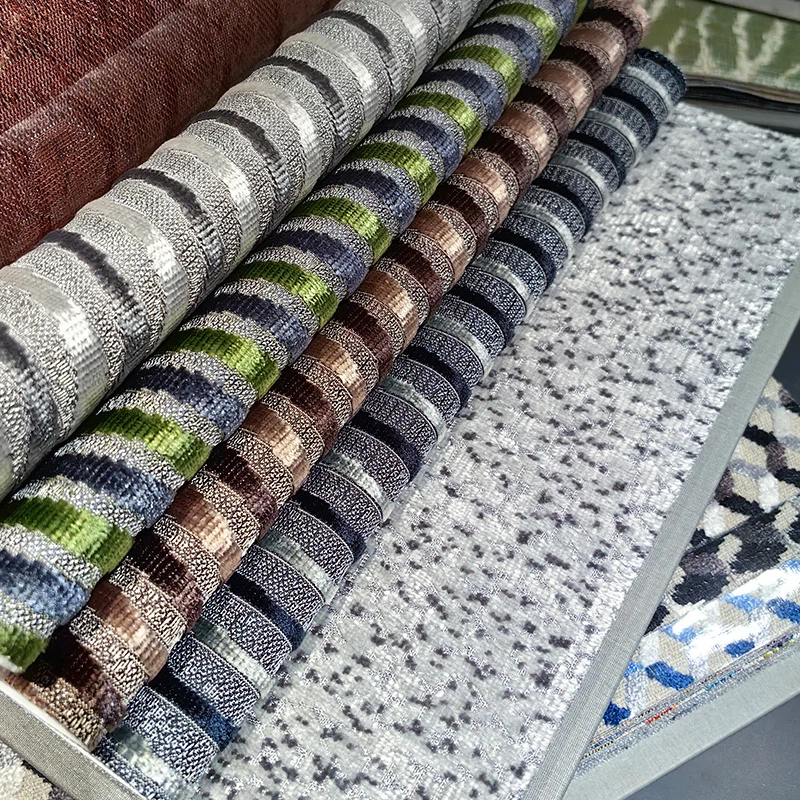
Another pro tip: avoid too many patterns. Velvet itself is a pretty bold fabric, so keep the rest of the room simple. If you do want a little more interest, maybe a subtle texture on your sofa or a woven rug, but nothing with busy patterns. That said, if you love a little detail, some velvet curtains have a woven design that’s still understated. Our Cutting Jacquard Velvet Curtain line, for example, has a subtle, raised pattern that catches the light without screaming “look at me.” It’s a middle ground between solid velvet and a bold print, perfect for minimalist rooms that need just a touch more personality without the clutter.
Wait, let’s talk about lighting. Velvet looks different in different light, which is why it’s so great for versatile spaces. In natural light, it will look softer, a little more muted, which fits perfectly with calm minimalist vibes. In artificial light—lamp light, overhead lights—it will develop a deep, rich sheen that adds warmth to the room. That’s the magic of velvet, and it’s exactly why it works in a minimalist space: it changes with the time of day, so the room never feels static. No matter the hour, there’s something new to look at, but it’s never overwhelming.
Let me share a quick example. I recently worked with a customer who had a tiny studio apartment, all matte gray walls, a low-slung leather sofa, and a concrete coffee table. She was worried that adding curtains would make the room feel smaller, not bigger. We went with our classic gray velvet curtains, hung them high, floor-length, with a thin matte black rod, and added a white sheer underneath. The result? The room felt 100 square feet bigger. The high hanging made the ceiling feel taller, the velvet added a soft contrast to the hard concrete and leather, and during the day, the sheer let in light so the space never felt dark. At night, closing the velvet turned the studio into a cozy, intimate space, exactly what she wanted for both working and relaxing. It wasn’t cluttered, it wasn’t loud, it was just perfect.
Common mistakes to avoid, because I’ve seen them all. First, buying curtains that are too short. Nothing kills a minimalist vibe more than curtains that end halfway down the window, leaving a gap between the bottom of the curtain and the floor. It looks unfinished, it cuts the room in half, and it makes the space feel smaller. Second, going for a color that’s too bright. Neon pink or electric blue velvet might work in a bohemian space, but in a minimalist room, it will stick out like a sore thumb. Third, using too thick a curtain fabric. Velvet is thick enough on its own—you don’t need a heavy, lined curtain that makes the window feel bulky. A medium-weight velvet, with a simple lining (blackout lining if you need privacy, sheer lining if you want light) is perfect. Fourth, over-accessorizing. No curtain ties, no tassels, no decorative holds that are anything other than sleek. If you need to pull the curtains back, use a simple metal holdback, hidden just enough that it doesn’t draw attention.
If you’re still on the fence about whether velvet fits your minimalist space, think about it this way: minimalist design is about elements that have purpose, that look intentional, and that make the space feel like yours. A pair of classic velvet curtains isn’t just a window treatment—it’s a piece that does three things: it adds texture, it adds warmth, and it does it without cluttering the room. It’s the kind of piece that people won’t notice at first glance, but they’ll feel immediately. They’ll walk in and think, “This room feels good,” and part of that good feeling is that soft, rich velvet hanging by the window, working quietly in the background to make the space feel complete.
At the end of the day, styling classic velvet curtains in a minimalist room is all about balance. Don’t let the velvet overpower the simplicity, don’t let the simplicity make the space feel boring. Pick the right color, hang them right, keep the hardware simple, and let that velvet’s texture do the talking. If you’re ready to find the perfect pair, our Classic Velvet Curtain collection has all the neutral tones and subtle options you need to make it work. And if you want a little extra detail that’s still minimalist, check out our Cutting Jacquard Velvet Curtain line for those understated woven patterns that add just the right amount of interest.
If you’re looking to stock up for your space or your business, we’d love to help you find the right fit for your minimalist room. We can answer any questions, guide you through sizing, and make sure you get exactly what you need to elevate your space with that perfect velvet touch. Don’t hesitate to reach out.

References:
- Design Basics. (2023). "The Complete Guide to Minimalist Window Treatments". Interior Design Magazine.
- Textile Industry Association. (2022). "The Versatility of Velvet in Modern Interior Design". Home Textiles Review.
- Architectural Digest. (2024). "How to Add Texture to a Sterile Minimalist Room". AD Pro Blog.